

2nd Floor, Hazina Towers, Nairobi
P.O Box 264 – 00902, Kikuyu
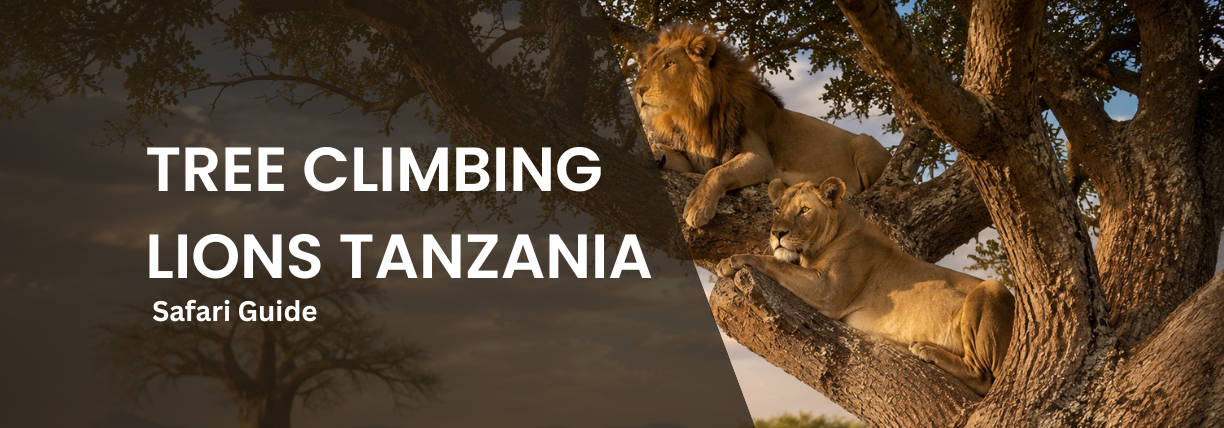
There are safari moments that feel almost unreal: the first trumpet of elephants in the distance, the shimmer of heat rising from the golden plains, the shadow of a giraffe moving between acacia trees. Then there is the moment you look up and see a lion resting in the branches.
In Tanzania’s wild north, where ancient baobabs stand like guardians over the savannah, tree-climbing lions create one of Africa’s most unforgettable safari scenes. A tawny lioness draped across a branch. A young male watching the plains from above. A pride sleeping in the warm afternoon light while safari vehicles pause quietly below.
For travelers searching for tree climbing lions Tanzania, Tarangire National Park deserves a special place on the itinerary. While no lion sighting can ever be promised, Tarangire offers the landscapes, wildlife density, and atmosphere that make every game drive feel full of possibility.
Lions are powerful, heavy animals. Most travelers imagine them walking across open plains, resting under shade, or gathering around a pride after a hunt. Seeing them high in a tree feels unexpected, almost magical.
That is what makes tree-climbing lions so fascinating. They challenge what many people think they know about big cats. Instead of lying in the grass, they may be stretched along thick branches, their paws hanging lazily over the edge, their golden coats blending into the bark and sunlight.
A sighting like this is rare because not all lions climb trees regularly. Even in areas where this behavior is known, it depends on the pride, the season, the weather, and the mood of the animals. That uncertainty makes the experience even more rewarding. On safari, the most memorable moments are often the ones you cannot schedule.
For photographers, honeymooners, families, and once-in-a-lifetime travelers, seeing tree-climbing lions in Tanzania can become the story they tell long after the journey ends.
Tarangire National Park is one of the best places to include in a Tanzania safari if you hope to see lions in trees. The park is famous for its ancient baobabs, wide grasslands, riverine woodland, and excellent predator sightings.
While Tarangire is especially known for elephants, it is also home to lions, leopards, cheetahs, hyenas, and abundant plains game. In certain areas, lions may be seen resting in trees, especially during warm parts of the day.
It is important to be honest: sightings are never guaranteed. These are wild animals moving freely through a natural ecosystem. However, Tarangire gives travelers a strong wildlife experience even if the lions remain on the ground.
Lake Manyara is another Tanzanian destination often associated with tree-climbing lions. It can be added to a northern circuit itinerary, especially for travelers who want a varied safari route with forest, lake views, flamingos, monkeys, and birdlife.
The Serengeti is more famous for the Great Migration and big cat sightings across open plains, but lions may occasionally climb trees in some areas. For travelers who want the most complete Tanzania safari, combining Tarangire, Serengeti, and Ngorongoro creates a beautifully balanced itinerary.
There is something deeply atmospheric about Tarangire. It feels wilder, quieter, and more intimate than some of Tanzania’s more famous safari parks. The landscapes are dramatic without feeling crowded: golden plains, seasonal swamps, river valleys, and huge baobab trees that seem older than memory.
The appeal of lions in Tarangire comes from this setting. A lion sighting here is not just about the animal. It is about the whole scene: the dust glowing in late afternoon light, elephants moving slowly in the background, and the possibility of a lion stretched across a tree branch above the savannah.
Tarangire is also shaped by water. During the dry season, the Tarangire River becomes a vital lifeline for wildlife. Animals gather closer to water sources, making game drives especially rewarding. This seasonal movement brings elephants, zebras, wildebeest, buffalo, giraffes, and predators into the same rich ecosystem.
Compared to Serengeti or Ngorongoro, Tarangire can feel more peaceful. For luxury travelers, families, and honeymooners, that quieter atmosphere is part of the charm.
There is no single guaranteed reason why lions climb trees, but safari guides and wildlife experts often point to several likely explanations.
One reason is comfort. During the heat of the day, tree branches can offer shade and better airflow than the ground. A lion resting above the grass may catch a breeze and escape the hottest surface temperatures.
Another possible reason is insects. Biting flies and other insects can irritate lions on the ground, especially in certain seasons. Climbing into a tree may help them avoid some of that discomfort.
Trees can also offer a better view. From a raised branch, a lion may be able to scan the surrounding landscape, watch nearby animals, or simply rest with a sense of space around them.
And sometimes, lions may climb because they have learned the behavior from others in the pride. Young lions are curious, playful, and adaptable. Over time, some prides become more comfortable in trees than others.
Whatever the reason, the result is unforgettable.
The best time for a Tarangire wildlife safari is often the dry season, generally from June to October. During these months, vegetation becomes thinner and animals are easier to spot. Wildlife also gathers around rivers, swamps, and remaining water sources, creating excellent conditions for game viewing.
For travelers hoping to see tree-climbing lions Tanzania is especially rewarding in the warmer, drier months when lions may rest during the heat of the day. Afternoon game drives can be particularly atmospheric, with golden light, long shadows, and predators beginning to stir after hours of rest.
That said, Tarangire can be rewarding at different times of year. The green season brings lush scenery, beautiful skies, fewer visitors, and excellent birdlife. Wildlife may be more spread out, but the park feels fresh and alive.
The best season depends on your priorities. For classic wildlife concentration, choose the dry season. For photography, quieter lodges, and rich green landscapes, consider the shoulder or green season.
Even if you do not see lions in trees, a Tarangire wildlife safari is still one of the most rewarding experiences in northern Tanzania.
Tarangire is especially famous for elephants. Large herds move through the park, often appearing beneath baobab trees or near the river. Watching elephants here can be deeply moving, especially when you see family groups communicating, protecting their young, and moving together with quiet intelligence.
You may also see giraffes browsing above the bush, zebras and wildebeest grazing across the plains, buffalo standing alert near water, and impalas moving through the golden grass.
Predators are part of the drama. Lions are present in the park, leopards may be found in riverine woodland, and cheetahs can sometimes be seen in more open areas. Hyenas add their own wild soundtrack to the landscape.
Birdlife is another highlight. Tarangire is excellent for birders, with colorful rollers, hornbills, raptors, starlings, and many seasonal species.
This is why Tarangire should not be treated as a quick stop. The park deserves time. The longer you stay, the more its subtle beauty reveals itself.
Tarangire fits beautifully into Tanzania’s northern safari circuit. Most travelers begin their journey from Arusha, then continue into Tarangire before exploring other iconic destinations.
A classic Tanzania itinerary may look like this:
This is one of the strongest safari combinations. Begin with elephants, baobabs, and possible tree-climbing lions in Tarangire. Continue to Ngorongoro Crater for high-density wildlife in a dramatic volcanic landscape. Then finish in Serengeti National Park for big cats, endless plains, and, depending on timing, the Great Migration.
For travelers with less time, Tarangire and Lake Manyara offer a varied short safari with forests, lake scenery, elephants, birds, and possible tree-climbing lion sightings.
For honeymooners and luxury travelers, a safari-and-beach itinerary is a beautiful option. After days of game drives, sundowners, and wilderness lodges, fly to Zanzibar for white sand beaches and warm Indian Ocean waters.
Tarangire works well for both luxury and mid-range safari travelers. The experience can be tailored around your comfort level, budget, travel style, and interests.
Luxury safaris may include private game drives, elegant tented camps, expert guides, scenic sundowners, bush meals, and lodges with sweeping views over the wilderness. Imagine returning from a golden-hour drive to a lantern-lit dinner under the stars, with the sounds of the African night around you.
Mid-range safaris can still feel deeply special, with comfortable lodges or camps, skilled guides, and well-planned game drives that focus on quality wildlife viewing rather than rushing from park to park.
Families can enjoy flexible pacing, child-friendly guides, and private vehicles. Honeymooners may prefer intimate camps, romantic sundowners, and slower itineraries. Photographers may want extra time in Tarangire to follow light, behavior, and unique wildlife moments.
A tailor-made safari allows every detail to fit the traveler, rather than forcing the traveler to fit a fixed package.
The best way to increase your chances of seeing tree-climbing lions is to travel with an experienced guide. Local guides understand animal behavior, seasonal movement, and the areas where lions are more likely to rest.
Patience is also essential. Safari is not a zoo experience. Sometimes the most rewarding sightings come after quiet hours of tracking, waiting, and observing.
Bring binoculars, especially for scanning tree branches and distant riverbanks. A good camera lens is helpful, but do not spend the entire safari behind a screen. Some moments deserve to be experienced fully.
Allow enough time in Tarangire. A one-night visit may give you a glimpse of the park, but two or more nights create better opportunities for relaxed game drives and deeper exploration.
Most importantly, keep expectations open. You may arrive hoping for tree-climbing lions and leave talking about elephants at sunset, a leopard in the shade, or a lion pride crossing the road at dawn. Tanzania has a way of giving travelers what they did not even know they were dreaming of.
A tailor-made Tanzania safari gives you the freedom to design the journey around what matters most to you. If your dream is to search for tree-climbing lions, your itinerary can include Tarangire and other destinations where these sightings are possible. If you want luxury lodges, family-friendly pacing, honeymoon privacy, photography time, or a mix of safari and beach, every detail can be shaped around your style.
A well-planned safari is not just about where you go. It is about when you travel, how many nights you spend in each park, which guide you travel with, and how smoothly the journey flows from one experience to the next.
For travelers interested in tree climbing lions Tanzania, Tarangire is a powerful addition to a northern circuit safari. It offers beauty, atmosphere, wildlife variety, and the thrilling possibility of seeing lions in a place you least expect them: above you, resting in the branches.
You may have the chance to see tree-climbing lions in Tanzania in places such as Tarangire National Park and Lake Manyara National Park. Sightings are never guaranteed, but these destinations are worth including in a northern Tanzania safari itinerary.
Yes, travelers may occasionally see tree-climbing lions in Tarangire. The park is also known for elephants, baobab trees, river landscapes, and excellent general wildlife viewing.
No. Tree-climbing lion sightings are never guaranteed because lions are wild animals moving naturally through the park. A skilled guide and enough time in the right areas can improve your chances, but every safari is different.
Lions may climb trees to escape heat, avoid insects, rest more comfortably, or gain a better view of the surrounding landscape. Some lions also appear to learn the behavior from other members of the pride.
Yes. A Tarangire wildlife safari is excellent for travelers who want elephants, lions, giraffes, zebras, wildebeest, buffalo, leopards, birds, and beautiful baobab landscapes. It is also a great choice for those seeking a quieter safari atmosphere.
Yes. Tarangire combines very well with Serengeti National Park and Ngorongoro Crater. This creates a rich northern Tanzania safari itinerary with elephants, big cats, crater wildlife, vast plains, and the possibility of the Great Migration depending on the season.
Let us help you design a tailor-made Tanzania safari package that includes Tarangire National Park, Serengeti National Park, Ngorongoro Crater, Lake Manyara, and other unforgettable destinations. Whether you are planning a luxury honeymoon, family safari, private wildlife adventure, or once-in-a-lifetime journey, we can create an itinerary based on your travel dates, budget, interests, and dream safari style.

Comments are closed