
2nd Floor, Hazina Towers, Nairobi
P.O Box 264 – 00902, Kikuyu
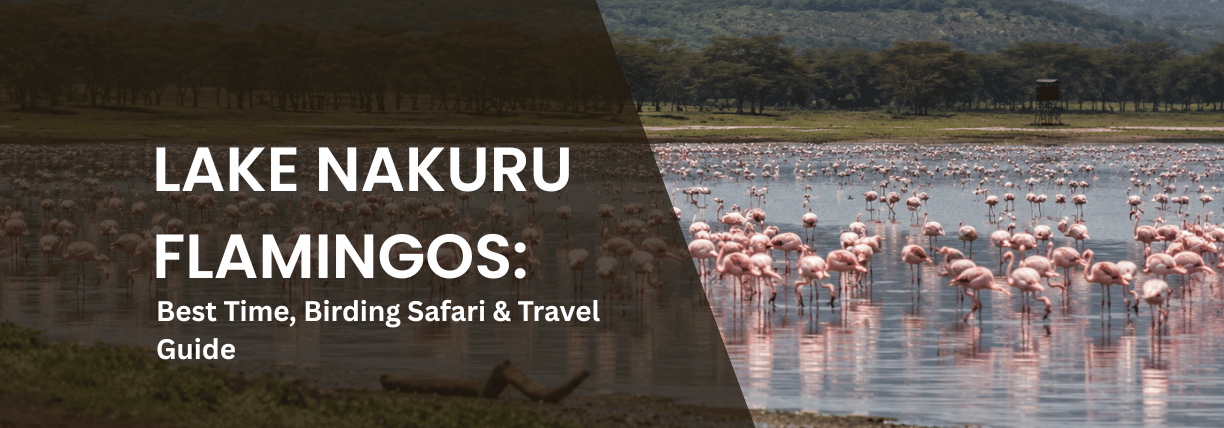
Lake Nakuru comes alive in the early morning as mist rises from the water and the Rift Valley escarpment glows with the first light of day. Along the shoreline, thousands of flamingos wade through the shallows, their pink feathers reflecting across the lake before flocks suddenly take flight in a breathtaking display. This unforgettable spectacle has made Lake Nakuru one of Kenya’s most iconic safari destinations, attracting bird lovers, photographers, and wildlife enthusiasts from around the world.
Beyond its famous flamingos, Lake Nakuru is a thriving wetland ecosystem renowned for its incredible birdlife, successful rhino conservation, and convenient safari experiences from Nairobi. Flamingo numbers naturally fluctuate throughout the year as changing water levels, algae growth, salinity, and food availability influence their movements. Understanding these seasonal patterns is key to planning a rewarding Lake Nakuru flamingo safari, making expert local knowledge invaluable for choosing the best time to visit.
Lake Nakuru became famous because of its extraordinary flamingo congregations. Kenya Wildlife Service notes that conservation efforts began here in 1961 when part of the lake was designated as a bird sanctuary to protect globally significant populations of flamingos and other waterbirds.
The park later became one of Kenya’s most loved safari destinations because it combines flamingo viewing, birdwatching, rhino sightings, scenic viewpoints, and compact game drives in one accessible location.
Lake Nakuru also forms part of the Kenya Lake System in the Great Rift Valley, a UNESCO World Heritage Site that includes Lake Nakuru, Lake Bogoria, and Lake Elementaita. UNESCO describes these alkaline lakes as recording some of the world’s greatest concentrations and diversities of bird species, with huge numbers of Lesser Flamingos moving between the lakes.
Seeing flamingos in Lake Nakuru is not only about the number of birds. It is about the setting.
The lake sits inside a national park surrounded by woodland, grassland, rocky escarpments, and acacia forest. This means travelers can enjoy flamingo viewing in the morning, search for rhinos later in the day, stop at viewpoints such as Baboon Cliff, and continue with a classic Lake Nakuru wildlife safari in the same park.
Flamingos are drawn to alkaline lakes because they feed on algae and small aquatic organisms. Reuters has reported that high water levels can reduce ideal feeding grounds and affect the lake’s alkaline balance, causing flamingos to move between Rift Valley lakes in search of better conditions.
This is important for travelers to understand: Lake Nakuru is famous for flamingos, but sightings can vary. Some years bring dramatic pink shorelines. Other periods may bring smaller flocks, while birds move to nearby lakes such as Bogoria or Elementaita.
When people talk about greater and lesser flamingos Lake Nakuru, they are referring to the two flamingo species that may be seen around the lake system.
Lesser flamingos are smaller, more vividly pink in large groups, and usually more numerous when conditions are right. These are the birds most associated with the famous “pink lake” image.
Greater flamingos are taller, paler, and often seen in smaller numbers. They are elegant birds with long legs, graceful necks, and a softer pink-and-white appearance.
Both species are beautiful to photograph, especially when feeding in shallow water or taking flight in the early morning light.
The best time to see flamingos in Lake Nakuru depends less on a fixed month and more on water conditions, algae growth, and regional flamingo movement.
In general, many travelers visit Lake Nakuru during Kenya’s popular dry-season safari months from June to October and January to February because wildlife viewing is strong and road conditions are often easier. However, flamingo numbers can change throughout the year.
For birding-focused travelers, it is wise to ask your safari expert about recent flamingo sightings before finalizing your itinerary. Flamingos may move between Lake Nakuru, Lake Bogoria, Lake Elementaita, and other Rift Valley wetlands depending on feeding conditions. UNESCO describes the Kenya Lake System as an interconnected alkaline lake environment where Lesser Flamingos move between lakes in large numbers.
So the honest answer is this: Lake Nakuru can be excellent for flamingos, but no responsible safari expert should guarantee massive flocks on a specific date.
If you are wondering where to see flamingos in Kenya, Lake Nakuru is one of the most famous options, but it is not the only one.
Kenya’s Great Rift Valley has several alkaline lakes that attract flamingos, especially Lake Nakuru, Lake Bogoria, and Lake Elementaita. Together, these lakes form a remarkable wetland network recognized by UNESCO for its birdlife, ecological processes, and scenic beauty.
Lake Nakuru remains a top choice because it is easy to combine with other Kenya safari destinations. It works well as a day trip from Nairobi, a one-night safari, a stop between Nairobi and the Masai Mara, or part of a Lake Nakuru and Lake Naivasha safari.
A successful Lake Nakuru flamingo viewing experience begins with timing, patience, and realistic expectations.
Arrive early in the morning when the light is soft and the lake is quiet. Flamingos are especially beautiful when the sun is low and their reflections shimmer across the shallow water.
For photographers, bring a zoom lens, extra batteries, memory cards, and a lens cloth. Lake edges can be bright, reflective, and dusty, so protect your equipment. A private safari vehicle is helpful because it allows more flexibility around positioning, timing, and waiting for birds to take flight.
Do not rush the experience. Flamingos are most magical when watched slowly — feeding, preening, stepping through the shallows, or rising together in a sudden sweep of pink wings.
A Lake Nakuru birding safari is rewarding even when flamingo numbers are lower than expected.
Kenya Wildlife Service describes Lake Nakuru National Park as an ornithological paradise with approximately 450 bird species, along with scenic viewpoints, picnic sites, Makalia Waterfalls, and Kenya’s first rhino sanctuary.
This makes the park especially attractive for birdwatchers, wildlife photographers, families, and travelers who want a compact safari with both birds and mammals.
A typical birding safari may include lake-edge viewing, woodland birding, raptor sightings, and stops at viewpoints overlooking the lake. The variety of habitats creates a richer experience than many travelers expect.
The diversity of Lake Nakuru National Park birds is one of the park’s greatest strengths.
Beyond flamingos, travelers may see pelicans, African fish eagles, cormorants, herons, egrets, storks, spoonbills, avocets, stilts, ducks, lapwings, bee-eaters, kingfishers, sunbirds, weavers, and raptors.
UNESCO notes that the Kenya Lake System supports globally important bird populations, including Black-necked Grebe, African Spoonbill, Pied Avocet, Little Grebe, Yellow-billed Stork, Black-winged Stilt, Grey-headed Gull, and Gull-billed Tern.
For serious birders, Lake Nakuru is best combined with other Rift Valley lakes, including Lake Naivasha, Lake Elementaita, or Lake Bogoria.
A Lake Nakuru wildlife safari is not only about birds.
The park is also known for rhinos, and KWS identifies Lake Nakuru as Kenya’s first rhino sanctuary. Travelers may also see buffalo, zebras, giraffes, waterbucks, baboons, warthogs, hyenas, lions, leopards, and other wildlife depending on the day.
Because Lake Nakuru is relatively compact compared with larger parks, it is a good option for travelers who want a strong safari variety without long game drives. It is especially suitable for families, first-time visitors, short Kenya safari itineraries, and photographers who want both wildlife and scenic landscapes.
There are several memorable things to do in Lake Nakuru National Park, especially for travelers who enjoy a mix of birding, wildlife, scenery, and photography.
The lake shore is the main attraction for bird lovers. Depending on conditions, you may see flamingos, pelicans, storks, fish eagles, and many waterbirds.
Game drives through the park give travelers the chance to see rhinos, buffalo, giraffes, zebras, antelopes, and predators.
Baboon Cliff offers one of the most beautiful views over the lake and surrounding park. It is excellent for landscape photography and understanding the shape of the lake.
Makalia Waterfalls is a scenic stop that can be included in some Lake Nakuru safari routes, depending on road conditions and timing.
Lake Nakuru is excellent for photographers because it combines birds, mammals, reflections, escarpments, forests, and open lake views in one destination.
A well-planned Lake Nakuru safari itinerary can be short, smooth, and rewarding.
Depart Nairobi in the morning and drive through the Great Rift Valley toward Lake Nakuru. Depending on your route, you may stop at a viewpoint before continuing to the park.
Arrive for lunch at your lodge or camp, then enjoy an afternoon game drive. Visit the lake shore if conditions allow, look for flamingos and other waterbirds, and continue through the park in search of rhinos, giraffes, buffalo, and other wildlife.
Start early with a morning game drive. This is a beautiful time for bird photography and wildlife viewing. After breakfast, return to Nairobi or continue to Lake Naivasha for a boat safari, walking safari, or extended Rift Valley itinerary.
For travelers with more time, Lake Nakuru can also be combined with the Masai Mara, Amboseli, or Aberdare National Park.
A Lake Nakuru and Lake Naivasha safari is one of the best short Kenya safari combinations.
Lake Nakuru is ideal for flamingos, rhinos, birding, and classic game drives. Lake Naivasha offers a different experience, with freshwater scenery, boat safaris, hippos, fish eagles, and nearby activities such as Crescent Island or Hell’s Gate National Park.
Together, the two lakes create a varied and comfortable Rift Valley safari. This combination is especially good for families, photographers, couples, and travelers with two to four days available from Nairobi.
Lake Nakuru safari packages can be designed around many travel styles.
A private safari gives you your own guide, vehicle, and schedule. This is ideal for photographers, couples, families, and travelers who want flexibility.
A private safari gives you your own guide, vehicle, and schedule. This is ideal for photographers, couples, families, and travelers who want flexibility.
A Lake Nakuru photography safari can focus on flamingos, birdlife, rhinos, lake reflections, escarpment views, and golden-hour game drives.
Mid-range safaris offer comfortable lodges, guided game drives, meals, park fees, and strong value for travelers who want a well-organized safari without luxury pricing.
Luxury travelers can enjoy upgraded lodges, private guiding, seamless transfers, scenic combinations with Lake Naivasha or the Masai Mara, and a more relaxed safari pace.
Plan with flexibility. Flamingo numbers can change, so choose Lake Nakuru for its full safari experience — flamingos, birds, rhinos, wildlife, and scenery.
Travel early from Nairobi to allow enough time for an afternoon game drive.
Bring binoculars, especially if birds are feeding farther from the road.
Pack neutral clothing, sunscreen, sunglasses, a hat, camera gear, and a light jacket for cooler mornings.
Choose a private safari vehicle if photography is important to you.
Consider combining Lake Nakuru with Lake Naivasha or the Masai Mara for a richer Kenya safari itinerary.
Most importantly, work with a local safari expert who can check recent sightings, plan the best route, and design your itinerary around your interests.
Yes, flamingos can still be seen in Lake Nakuru, but numbers vary. Flamingos move between Rift Valley lakes depending on water levels, salinity, algae, and food availability.
The best time to see flamingos in Lake Nakuru depends on lake conditions rather than a guaranteed month. For the best experience, ask a local safari expert to check recent flamingo sightings before you travel.
Lake Nakuru is famous for flamingos because its alkaline waters historically attracted large flocks of feeding flamingos. It was first protected as a bird sanctuary to conserve flamingos and other waterbirds.
Yes. Lake Nakuru can be visited from Nairobi as a day trip, overnight safari, or part of a longer Kenya itinerary that includes Lake Naivasha, Masai Mara, or other parks.
Yes. Lake Nakuru and Lake Naivasha safari is a great short Kenya safari combination, offering flamingos, rhinos, birding, boat safaris, hippos, and beautiful Rift Valley scenery.
A journey to see Lake Nakuru flamingos is more than a birding trip. It is a chance to experience one of Kenya’s most beautiful Rift Valley landscapes — a place where pink birds shimmer on the water, rhinos graze beneath acacia trees, and every viewpoint opens into another layer of wild beauty.
Whether you are planning a Lake Nakuru flamingo safari, a private birding safari, a family-friendly wildlife trip, a luxury photography journey, or a Lake Nakuru and Lake Naivasha safari, our local safari experts can help design the right itinerary for your travel style.
Inquire today to create your own tailor-made Lake Nakuru safari package and plan a Kenya birding and wildlife safari with trusted local guidance

Comments are closed