

2nd Floor, Hazina Towers, Nairobi
P.O Box 264 – 00902, Kikuyu
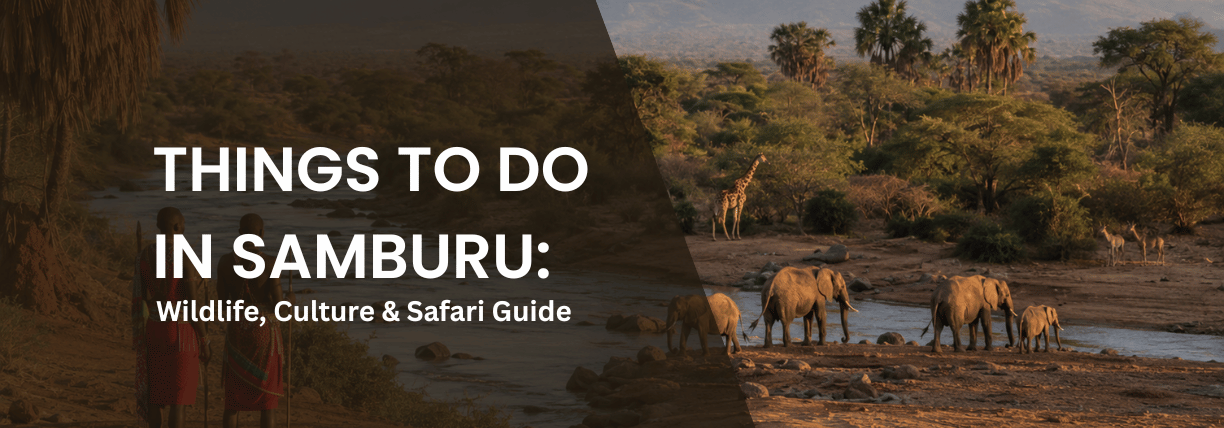
Samburu feels different from the moment you arrive.
The air is dry and golden. The hills rise in rugged silhouettes beyond the plains. Acacia trees stretch their thorny branches into the heat, and the Ewaso Nyiro River winds through the wilderness like a lifeline. Elephants move slowly through the dust, their skin glowing red in the afternoon light. Giraffes step between thorn bushes with quiet elegance. Somewhere near the river, a lion rests in the shade.
But Samburu is more than a wildlife destination. It is a place where landscape, animals, and culture meet in a way that feels deeply personal. Here, safari is not only about seeing wildlife. It is about understanding the rhythm of northern Kenya, meeting the Samburu people, and experiencing a side of the country that feels wild, remote, and beautifully authentic.
For travelers searching for the best things to do in Samburu, this guide will help you discover the top safari experiences, from game drives and the Samburu Special Five to a Samburu tribe safari, a respectful Samburu village visit, and a meaningful cultural safari Kenya itinerary.
Samburu National Reserve sits in northern Kenya along the banks of the Ewaso Nyiro River, a vital water source that draws wildlife through the dry landscape. The reserve covers about 165 square kilometers and forms part of a wider northern Kenya ecosystem connected with Buffalo Springs, Shaba, and nearby community conservancies.
What makes Samburu special is its sense of remoteness. Unlike some of Kenya’s busier safari destinations, Samburu feels quieter, more intimate, and more dramatic. The scenery is raw and striking: dry riverbeds, doum palms, rugged hills, open scrubland, and golden plains that glow at sunrise and sunset.
It is also one of the best places in Kenya to see rare northern wildlife species. Samburu is famous for the Samburu Special Five: Grevy’s zebra, reticulated giraffe, Somali ostrich, gerenuk, and Beisa oryx. These species are especially associated with the arid landscapes of northern Kenya and are a major reason travelers include Samburu in a Kenya safari itinerary.
And then there is the cultural depth. Samburu is home to the Samburu people, whose traditions, beadwork, pastoral lifestyle, music, dress, and connection to the land add a powerful human story to the safari experience.
Game drives are the heart of any Samburu safari. The best drives often begin early, when the light is soft and the air is cool. This is when predators may still be active, elephants walk toward the river, and antelope move across the plains before the heat rises.
Late afternoon is equally magical. The landscape turns amber, shadows stretch across the dry earth, and wildlife gathers near the Ewaso Nyiro River. A private guide can help track fresh signs, explain animal behavior, and position you for beautiful photography.
One of the most exciting things to do in Samburu is search for the Samburu Special Five. These are not the same as the Big Five. They are rare, elegant, desert-adapted species that make Samburu feel completely different from other safari regions.
Look for the long-necked gerenuk standing on its hind legs to browse leaves. Watch for the bold black-and-white pattern of Grevy’s zebra. See reticulated giraffes moving gracefully through the acacia woodland. Scan the plains for Beisa oryx with their striking horns, and keep an eye out for the blue-necked Somali ostrich.
The Ewaso Nyiro River is the soul of Samburu. In the dry season, it becomes a magnet for wildlife. Elephants drink along the banks, crocodiles rest near the water, and birds gather in the riverine trees. The river also creates some of the most beautiful safari scenes in northern Kenya, especially at sunrise and sunset.
A slow game drive along the river can be one of the most rewarding experiences in Samburu, offering both wildlife action and peaceful moments in nature.
Samburu is excellent for birdwatching, especially around the river, doum palms, rocky outcrops, and dry plains. Travelers may see kingfishers, herons, bee-eaters, hornbills, vultures, raptors, and the striking Somali ostrich. The Ewaso Nyiro River and surrounding habitats are commonly highlighted as key birding areas in Samburu.
For photographers, Samburu is a dream. The dry landscapes create rich contrast, the wildlife is distinctive, and the light can be spectacular. Elephants crossing dusty tracks, reticulated giraffes framed by acacia trees, Samburu warriors in colorful dress, and golden river scenes all make powerful images.
Always ask before photographing people, especially during cultural visits. A respectful safari experience is not only more ethical; it also creates more meaningful memories.
A Samburu sundowner is simple but unforgettable. As the sun lowers behind the hills, your guide may stop at a scenic viewpoint or open plain. You step out of the vehicle, drink in hand, as the sky turns gold, rose, and deep blue.
It is one of those quiet safari rituals that stays with you long after the journey ends.
In some lodges or conservancy areas, guided nature walks may be available with trained guides. These walks offer a slower, more detailed look at the bush. You may learn about animal tracks, medicinal plants, bird calls, insects, and the small signs that are easy to miss from a vehicle.
Walks are usually arranged based on location, safety, and local rules, so they should be planned through your safari specialist or lodge.
A Samburu tribe safari adds cultural richness to your wildlife journey. Instead of only passing through the land, you begin to understand the people who have lived in this region for generations.
A Samburu cultural experience may include learning about traditional dress, colorful beadwork, livestock herding, music, dance, warrior culture, family life, and the community’s deep connection to cattle and the land. The Samburu are widely described as a traditionally pastoralist community in northern Kenya, with livestock playing an important role in social and economic life.
You may see the famous bead collars worn by Samburu women, learn about the meaning of certain colors and patterns, or hear stories about how knowledge is passed between generations. In the right setting, this experience feels warm, personal, and respectful—not staged or rushed.
The best Samburu tribe safari experiences are arranged through trusted local guides, community-run initiatives, or lodges with established relationships with nearby communities. This helps ensure the visit benefits local people and is handled with dignity.
A Samburu village visit is one of the most memorable cultural experiences in northern Kenya. Travelers may visit a traditional homestead, often called a manyatta, and learn how families live in this dry and beautiful environment.
During a village visit, you may be welcomed with songs or dances, invited to see traditional homes, introduced to local crafts, or given the chance to purchase handmade beadwork directly from artisans. You may also hear stories about pastoral life, family traditions, ceremonies, and the role of elders and warriors in the community.
The most important part of a Samburu village visit is respect. Dress modestly, ask before taking photos, listen more than you speak, and remember that you are entering someone’s home and cultural space. A good guide will help explain customs, translate where needed, and make sure the interaction feels comfortable for both visitors and hosts.
For travelers seeking a cultural safari Kenya experience, Samburu is one of the most rewarding destinations. It combines rare wildlife, dramatic scenery, and meaningful cultural connection in one itinerary.
Many travelers come to Kenya dreaming of lions, elephants, and wide savannahs. Samburu offers all of that, but it also gives something deeper: the chance to understand how people, wildlife, and land coexist in a fragile northern ecosystem.
A cultural safari in Samburu can be especially meaningful for families, couples, honeymooners, photographers, and travelers who want more than a checklist safari. It creates space for conversation, learning, and connection.
Samburu is rich in wildlife despite its dry climate. Along the river and plains, you may see elephants, lions, leopards, cheetahs, buffalo, crocodiles, giraffes, zebras, antelope, and many bird species.
The reserve is especially known for:
The Samburu Special Five are:
• Grevy’s zebra
• Reticulated giraffe
• Somali ostrich
• Gerenuk
• Beisa oryx
These animals are beautifully adapted to Samburu’s semi-arid environment and are a major highlight for wildlife lovers.
Samburu can also offer excellent predator sightings. Lions are often seen resting in the shade or moving through the plains, while leopards may be found near riverine woodland. Cheetahs may appear in more open areas where they can use speed to hunt.
Elephants are one of Samburu’s signature safari experiences. Watching a herd arrive at the Ewaso Nyiro River, with calves tucked safely between adults, is one of the most moving moments you can have on safari.
Samburu can be visited year-round, but the dry seasons are generally best for wildlife viewing. The months from June to September and January to February are often recommended because animals are easier to spot as they gather near limited water sources.
The longer dry season from June to October is excellent for game drives, photography, and river-based wildlife viewing. The short dry season from January to February can also be rewarding, with clear skies and strong wildlife visibility.
The wetter months can bring greener scenery, fewer visitors, and good birding, but wildlife may be more spread out and some tracks can become harder to navigate. For a balanced Samburu safari, most travelers prefer two to three nights, allowing time for game drives, cultural visits, and relaxed lodge experiences.
Luxury Samburu safaris include stylish lodges or tented camps, private guides, elegant dining, scenic sundowners, and seamless transfers. These are ideal for honeymooners, couples, and travelers who want comfort without losing the wild feeling of the destination.
A mid-range Samburu safari offers excellent wildlife viewing, comfortable accommodation, and guided experiences at a more accessible price point. This is a great choice for families, small groups, and travelers who want strong value.
A private safari gives you flexibility. You can spend longer at sightseeing, add cultural experiences, travel at your own pace, and combine Samburu with other destinations based on your interests.
Samburu is wonderful for families with curious children or teens. The wildlife is exciting, the cultural learning is meaningful, and the landscape feels adventurous. Family-friendly lodges can help create a safe and comfortable experience.
Luxury Samburu safaris include stylish lodges or tented camps, private guides, elegant dining, scenic sundowners, and seamless transfers. These are ideal for honeymooners, couples, and travelers who want comfort without losing the wild feeling of the destination.
Samburu pairs beautifully with other Kenya safari destinations. A tailor-made itinerary can combine Samburu with Ol Pejeta for rhino conservation, Lake Nakuru for flamingos and rhinos, Masai Mara for big cats and the Great Migration season, or Amboseli for elephants and Mount Kilimanjaro views.
Pack lightweight, breathable clothing in neutral colors such as khaki, olive, beige, and soft brown. Bring a light jacket for early morning game drives, comfortable shoes, sunscreen, sunglasses, insect repellent, and a wide-brimmed hat.
For photography, bring a zoom lens if possible, extra memory cards, and spare batteries. Dust can be heavy, so a camera cover or soft cloth is helpful.
When visiting Samburu communities, dress respectfully and ask before taking photos. Buying crafts directly from local artisans can be a meaningful way to support the community.
Samburu can be reached by road or by scheduled light aircraft flights, depending on your itinerary, budget, and travel style. Flying saves time and adds a beautiful aerial view of Kenya’s changing landscapes, while road transfers allow you to experience more of the countryside.
For most travelers, three days and two nights is the minimum. Three nights is even better if you want a slower pace, stronger wildlife opportunities, and time for both safari and cultural experiences.
The best things to do in Samburu include game drives, spotting the Samburu Special Five, visiting the Ewaso Nyiro River, birdwatching, photography, sundowners, guided nature walks where available, and cultural visits with the Samburu community.
Yes, Samburu is absolutely worth visiting, especially if you want a quieter, more remote safari experience in Kenya. It offers rare wildlife, dramatic landscapes, excellent elephant sightings, and rich cultural encounters.
Samburu is famous for the Samburu Special Five, the Ewaso Nyiro River, elephants, big cats, rugged northern landscapes, and the cultural heritage of the Samburu people.
Yes, many Samburu safari itineraries can include a Samburu village visit. The best visits are arranged respectfully through trusted guides, lodges, or community partnerships to ensure the experience benefits local people.
A Samburu tribe safari is a cultural safari experience that introduces travelers to Samburu traditions, dress, beadwork, pastoral life, music, dance, warrior culture, and the community’s relationship with the land.
Yes, Samburu is one of the best destinations for a cultural safari in Kenya because it combines wildlife viewing with authentic cultural interaction and a strong sense of place.
Most travelers need at least two to three nights in Samburu. This gives enough time for game drives, river wildlife viewing, photography, and a cultural visit without feeling rushed.
You can see elephants, lions, leopards, cheetahs, buffalo, crocodiles, giraffes, zebras, antelope, many birds, and the Samburu Special Five: Grevy’s zebra, reticulated giraffe, Somali ostrich, gerenuk, and Beisa oryx.
Samburu is for travelers who want more than an ordinary safari. It is for those who want wild landscapes, rare wildlife, fewer crowds, and a deeper connection to Kenya’s people and culture.
Whether you are planning a luxury honeymoon, a family adventure, a private wildlife safari, or a meaningful cultural safari in Kenya, Samburu can become one of the most unforgettable parts of your journey.
Let our safari specialists design a tailor-made Samburu safari package that combines expert-guided game drives, authentic Samburu cultural experiences, handpicked lodges, and seamless Kenya safari planning from start to finish.

Comments are closed