

2nd Floor, Hazina Towers, Nairobi
P.O Box 264 – 00902, Kikuyu
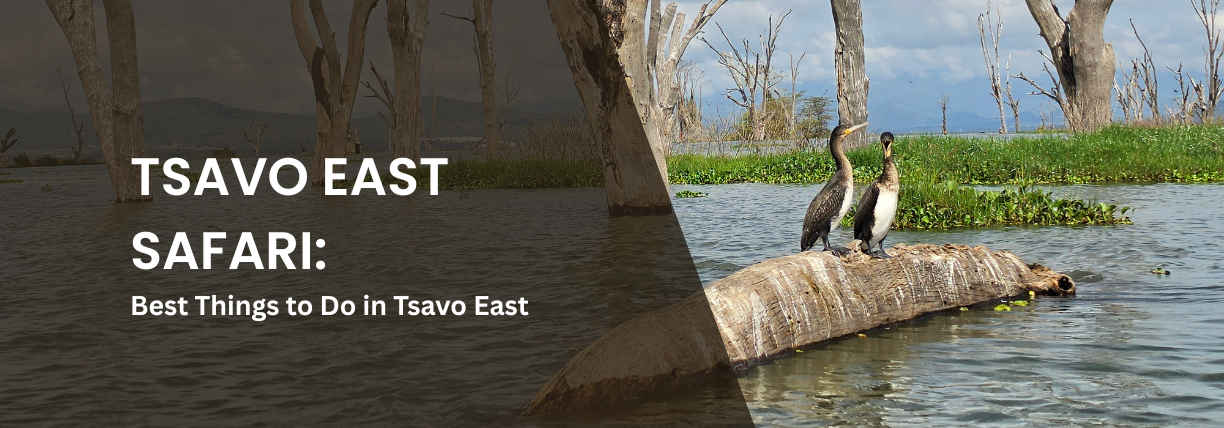
A Tsavo East safari begins with a sense of immense, untamed space. Red earth stretches beneath endless skies as elephants dusted in ochre wander the plains and acacia trees stand silhouetted against dramatic clouds. A giraffe lingers on the horizon, while lions rest unseen in the shade, reminding visitors that this is a landscape that feels ancient, raw, and wonderfully alive.
One of Kenya’s most iconic safari destinations, Tsavo East captivates not only with its wildlife but also with its scale and atmosphere. Away from the busiest safari circuits, the park offers unforgettable encounters along the Galana River and at Aruba Dam, beneath the towering cliffs of Mudanda Rock, and beside the extraordinary Yatta Plateau, one of the world’s longest lava flows. Here, the magic lies in the silence between sightings, the glow of evening light on red soil, and the enduring sense of wilderness that has defined Tsavo East for generations.
Tsavo East is not a small, manicured safari park. It is wide, open, and untamed. The landscape stretches into the distance with semi-arid plains, acacia scrub, seasonal rivers, rocky outcrops, and volcanic features that give the park its dramatic personality.
One of the biggest reasons travelers choose Tsavo East is its sense of wilderness. Compared with some of Kenya’s more famous parks, Tsavo often feels quieter and more spacious. Game drives can unfold with fewer vehicles around, giving the safari a more private and authentic rhythm. Luxury travel operator &Beyond notes that the wider Tsavo region is one of Kenya’s largest wilderness areas and is known for elephants, dramatic landscapes, and a more pristine wildlife experience.
Tsavo East is also very convenient for Kenya safari itineraries. It can be reached from Nairobi or Mombasa, making it ideal for travelers who want to combine safari with the Kenyan coast. Kenya Wildlife Service lists road access via the Nairobi–Mombasa road, including Mtito Andei Gate, which sits between Nairobi and Mombasa.
But what truly defines Tsavo East is the atmosphere. The park feels cinematic: elephants dusted red by the soil, storm clouds gathering over open plains, rivers cutting through dry country, and golden sunsets that turn every game drive into a scene worth remembering.
The best things to do in Tsavo East National Park combine wildlife, scenery, photography, and exploration. This is not a destination to rush. Tsavo East rewards travelers who slow down, follow the movement of animals, and allow the wilderness to reveal itself gradually.
Game drives are the heart of any Tsavo East safari. Early morning is one of the best times to explore, when temperatures are cooler and predators may still be active. Elephants, giraffes, zebras, buffalo, antelope, and birdlife are often easier to spot before the heat builds.
Late afternoon game drives are equally rewarding. The light softens, the red earth glows, and animals begin moving again after resting through the day. For photographers, this is one of the most beautiful times to capture Tsavo’s landscapes.
Tsavo East is a dream for photographers because the scenery is as powerful as the wildlife. Red elephants against blue sky, giraffes crossing open plains, birds along the river, and dramatic light over Mudanda Rock all create striking images.
A private safari vehicle is especially helpful for photography because your guide can position the vehicle carefully, wait patiently at sightings, and follow the best light instead of rushing through a fixed route.
Tsavo East is also excellent for birdwatching. Kenya Wildlife Service records about 500 bird species in the park, making it a rewarding destination for both casual bird lovers and serious birders. Water sources such as Aruba Dam, the Galana River, and seasonal wetlands can be especially productive.
Tsavo East is not only about wildlife. Its natural landmarks give the park a powerful sense of place. Aruba Dam, Galana River, Mudanda Rock, and Yatta Plateau each add a different layer to the safari experience, from water-based wildlife viewing to panoramic landscapes and volcanic history.
Aruba Dam is one of the most important stops on a Tsavo East safari. Located on the north bank of the seasonal Voi River, it attracts many animals and is considered one of the park’s best game-viewing areas. Kenya Wildlife Service describes Aruba Dam as a beautiful water source visited by thousands of animals, making it a strong wildlife-viewing destination.
Because water is so important in Tsavo’s dry landscape, Aruba Dam can become a natural gathering place. Elephants may arrive in family groups, buffalo can appear in large numbers, and giraffes, zebras, antelope, and birdlife are often seen nearby. Predators may also move through the area, especially when prey animals are concentrated around water.
For travelers, Aruba Dam is a place to pause. Your guide may stop the vehicle at a respectful distance and allow the scene to unfold: elephants drinking, birds calling, dust rising in the afternoon light, and wildlife moving in and out of the scrub.
The Galana River brings a different mood to Tsavo East. After miles of dry plains and red earth, the river feels like a ribbon of life through the wilderness. Its banks attract animals that come to drink, rest, and move through the riverine habitat.
This is one of the most scenic areas of the park. Travelers may see crocodiles along the riverbanks, hippos in deeper pools, elephants coming down to drink, and a variety of birds near the water. Kenya Wildlife Service highlights the Galana River as one of Tsavo East’s most evocative safari scenes, especially when elephants gather near the palm-shaded water.
The Galana area is also excellent for photography. The contrast between water, palms, rocks, animals, and dry wilderness gives the landscape a rich visual texture. Depending on your route, your guide may combine the Galana River with nearby scenic areas such as Lugard’s Falls or crocodile-viewing points.
Mudanda Rock is one of Tsavo East’s most memorable landmarks. It is a long, whale-backed rock formation that rises above the surrounding plains and offers beautiful views over the landscape. At its base, water collects and attracts wildlife, especially during drier periods.
Kenya Wildlife Service describes Mudanda Rock as running for over 1.5 kilometres and towering above a natural dam, with elephants and leopards among the wildlife that may be seen in the area.
For travelers, Mudanda Rock is special because it gives perspective. After hours of driving through the plains, standing near this ancient rock formation allows you to appreciate the scale of Tsavo East. From the viewpoint, the wilderness opens wide in every direction. Below, animals may gather around the water source, creating one of the park’s classic safari scenes.
Morning or late afternoon is often best, both for comfort and photography. The rock can be hot in the middle of the day, but in softer light it becomes one of the most atmospheric places in the park
The Yatta Plateau is one of Tsavo East’s most remarkable geological features. It adds drama to the landscape and reminds travelers that Tsavo is shaped not only by wildlife, but also by ancient natural forces.
Kenya Wildlife Service identifies the Yatta Plateau as about 300 kilometres long and one of the key features that makes Tsavo East unique. Other safari travel sources also describe it as one of the world’s longest lava flows, stretching across the landscape and rising above the plains.
You may not “visit” the Yatta Plateau in the same way you stop at a lodge or viewpoint. Instead, it becomes part of the park’s atmosphere: a long, commanding presence in the distance, shaping the horizon and deepening Tsavo East’s sense of scale. For travelers who love landscapes, geology, and wild scenery, it is one of the features that makes a Tsavo East safari feel so different from other Kenya safari destinations.
Wildlife sightings in Tsavo East vary depending on the season, time of day, route, rainfall, and movement of animals. This is a wild ecosystem, not a zoo, and that is part of its beauty.
Common safari highlights may include:
•Elephants, especially the famous red-dust elephants
•Lions
•Leopards
•Buffalo
•Giraffes
•Zebras
•Antelope
•Hippos
•Crocodiles
•Rich birdlife
Kenya Wildlife Service lists many larger mammals in Tsavo East, including elephants, buffalo, lions, leopards, hippos, crocodiles, waterbuck, lesser kudu, gerenuk, and prolific birdlife.
Elephants are often the stars of the park. Their red color comes from the dust and soil they throw over themselves, creating one of the most iconic images in Kenya safari photography. Lions can be seen, although sightings depend on timing and location. Leopards are more elusive, as they are in many safari destinations, but a skilled guide improves your chances by reading tracks, behavior, and habitat.
Tsavo East can be visited year-round, but each season offers a different safari experience.
The dry seasons are generally excellent for wildlife viewing because animals are more likely to gather around rivers, dams, and waterholes. Kenya Experience notes that June to October and January to February are strong dry-season periods, when wildlife often concentrates around water sources.
During the green or rainy seasons, the park becomes softer and more colorful. Vegetation is lusher, landscapes are beautiful for photography, and birdwatching can be especially rewarding. Wildlife may be more dispersed because water is available in more places, but the scenery can be spectacular.
For easier game viewing, choose the dry season. For photography, dramatic skies, fewer crowds, and greener landscapes, the shoulder and green seasons can be very rewarding. For birdwatching, the greener months often bring excellent activity.
A Tsavo East safari can be designed in many ways depending on your travel style, budget, and overall Kenya itinerary.
Luxury safaris focus on carefully selected lodges or tented camps, private guiding, excellent service, and a slower pace. This is ideal for travelers who want comfort without losing the feeling of wilderness.
Mid-range safaris offer strong value with comfortable accommodation, guided game drives, and well-planned routes. This is a great option for couples, families, and first-time safari travelers.
A private safari gives you flexibility. You can spend longer at sightings, start early, focus on photography, or adjust the pace for children, honeymooners, or older travelers.
Tsavo East can work well for families because it combines wildlife, open scenery, and accessible routes from Mombasa or Nairobi. A private vehicle is usually best for families, allowing the guide to adapt the day to everyone’s energy level.
For honeymooners, Tsavo East offers privacy, atmosphere, and romance. Think sunset game drives, quiet lodges, private dinners, and a safari route that can end with a beach stay on the Kenyan coast.
Tsavo East pairs beautifully with Tsavo West, Amboseli, Mombasa, and even the Masai Mara. A classic route might combine Amboseli’s Kilimanjaro views, Tsavo West’s volcanic scenery, Tsavo East’s red elephants, and a relaxing beach extension near Mombasa or Diani.
Plan at least two nights if possible. A one-night safari can offer a taste of Tsavo East, especially from Mombasa, but two or three nights allow more time for game drives and scenic highlights.
Pack neutral clothing, sunscreen, a hat, sunglasses, insect repellent, binoculars, a camera, and any personal medication. Kenya Wildlife Service also recommends essentials such as drinking water, binoculars, sunscreen, insect repellent, a first aid kit, and a camera.
Choose a knowledgeable safari operator. Tsavo East is vast, and good for guiding matters. An experienced guide understands animal movement, seasonal water sources, light, timing, and how to create a safari that feels smooth rather than rushed.
For photography, bring a zoom lens if you have one, but do not forget wide-angle shots. Tsavo is as much about landscapes as close-up wildlife. Some of the best images come from elephants moving through dust, storm clouds over the plains, or silhouettes at sunset.
Yes. Tsavo East is worth visiting for travelers who want a classic Kenya safari with vast landscapes, red elephants, beautiful scenery, and a quieter wilderness feel compared with busier safari parks.
Tsavo East is famous for its red-dust elephants, wide-open plains, Galana River, Aruba Dam, Mudanda Rock, Yatta Plateau, and strong sense of wilderness.
The best things to do in Tsavo East National Park include game drives, wildlife viewing, photography, birdwatching, visiting Aruba Dam, exploring the Galana River, seeing Mudanda Rock, and viewing the Yatta Plateau.
Yes. Elephants are one of the main highlights of a Tsavo East safari. The park is especially known for elephants that appear red because they dust themselves with Tsavo’s iron-rich soil.
Aruba Dam is located on the north bank of the seasonal Voi River and is one of the best wildlife-viewing areas in Tsavo East.
Near the Galana River, travelers may see elephants, hippos, crocodiles, antelope, birds, and other animals coming to drink or move along the riverbanks.
A Tsavo East safari is for travelers who want Kenya in its raw, spacious, cinematic form: red elephants, open plains, river life, dramatic skies, and the feeling of being deep in one of East Africa’s great wilderness areas.
For the best experience, your safari should be planned around your travel style, budget, preferred lodges, ideal route, and the season you plan to visit. Contact our safari specialists to create a tailor-made Tsavo East safari package that can include Aruba Dam, Galana River, Mudanda Rock, Yatta Plateau, and a seamless Kenya safari itinerary designed just for you.
The Yatta Plateau is a dramatic geological feature in Tsavo East and is widely described as one of the world’s longest lava flows. It adds scale, depth, and scenic drama to the park.
Two to three days is ideal for most travelers. One night can work for a short safari from Mombasa, but extra time allows you to enjoy game drives, scenic landmarks, and a more relaxed safari pace.
Yes. Tsavo East combines well with Tsavo West, Amboseli, Mombasa, Diani Beach, Nairobi, and the Masai Mara, depending on your travel dates, budget, and preferred safari style.
A Tsavo East safari is for travelers who want Kenya in its raw, spacious, cinematic form: red elephants, open plains, river life, dramatic skies, and the feeling of being deep in one of East Africa’s great wilderness areas.
For the best experience, your safari should be planned around your travel style, budget, preferred lodges, ideal route, and the season you plan to visit. Contact our safari specialists to create a tailor-made Tsavo East safari package that can include Aruba Dam, Galana River, Mudanda Rock, Yatta Plateau, and a seamless Kenya safari itinerary designed just for you.
A Tsavo East safari is for travelers who want Kenya in its raw, spacious, cinematic form: red elephants, open plains, river life, dramatic skies, and the feeling of being deep in one of East Africa’s great wilderness areas.
For the best experience, your safari should be planned around your travel style, budget, preferred lodges, ideal route, and the season you plan to visit. Contact our safari specialists to create a tailor-made Tsavo East safari package that can include Aruba Dam, Galana River, Mudanda Rock, Yatta Plateau, and a seamless Kenya safari itinerary designed just for you.

Comments are closed