
2nd Floor, Hazina Towers, Nairobi
P.O Box 264 – 00902, Kikuyu
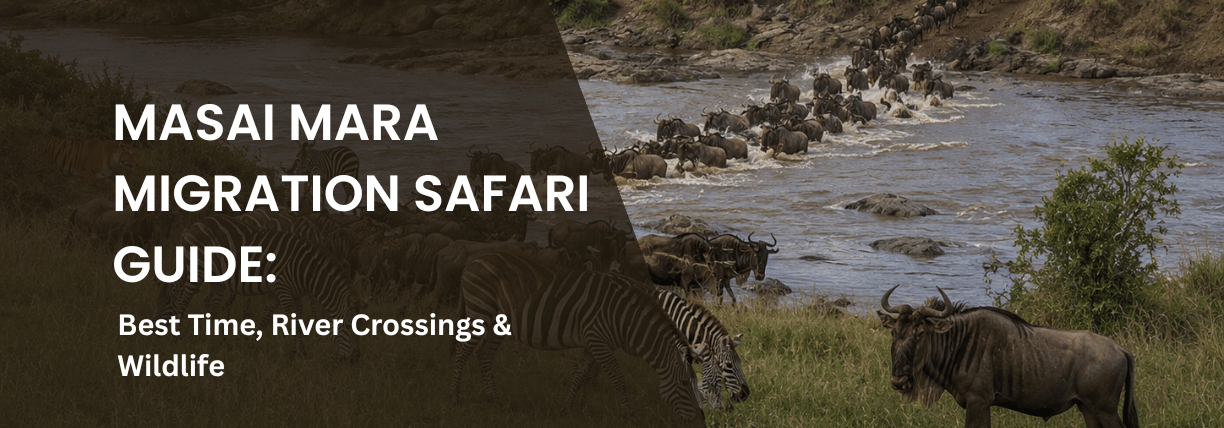
There are moments in Africa that stay with you forever. Imagine standing on the golden plains of the Masai Mara as thousands of wildebeest thunder across the savannah. Lions watch from the grasslands, crocodiles wait along the Mara River, and the sounds of the wild surround you.
The Masai Mara Great Migration is one of the world’s most spectacular wildlife events. Every year, millions of wildebeest, zebras, and gazelles move between Tanzania’s Serengeti and Kenya’s Masai Mara in search of fresh grazing and water. From dramatic Mara River crossings to unforgettable predator encounters, this natural phenomenon offers one of the most exciting safari experiences in Africa.
This guide explains the best time to visit, where to see the migration, what wildlife to expect, and how to plan an unforgettable Kenya safari.
The Great Migration is the annual movement of wildebeest, zebras, gazelles, and other grazing animals between Tanzania’s Serengeti ecosystem and Kenya’s Masai Mara. Driven by seasonal rainfall and the search for fresh grass and water, the migration covers vast distances across one of Africa’s most important wildlife ecosystems.
More than a million wildebeest travel alongside large zebra herds, creating one of the largest land-animal migrations on Earth. As the herds move, predators such as lions, cheetahs, leopards, and hyenas follow closely, creating dramatic wildlife encounters throughout the journey.
What makes the Masai Mara Great Migration unique is that no two days are the same. You may witness thousands of animals crossing open plains, predators stalking prey, or herds gathering at rivers before attempting dangerous crossings. This constant movement creates a dynamic safari experience that attracts wildlife enthusiasts and photographers from around the world.
During the migration, you can experience:
• Massive wildebeest and zebra herds
• Exciting predator-prey interactions
• Mara River crossings
• Outstanding wildlife photography opportunities
• Exceptional game viewing across the Masai Mara
The best time to experience the Masai Mara Great Migration is generally between July and October, when large herds move into Kenya from the Serengeti. However, each month offers a slightly different safari experience.
July often marks the beginning of the migration season in Kenya. As the first herds arrive, wildlife activity increases across the reserve while visitor numbers are usually lower than later in the season.
Highlights include:
• Wildebeest entering the Masai Mara
• Excellent predator sightings
• Fresh landscapes after seasonal rains
• Fewer crowds
August is widely considered one of the best months to visit Masai Mara. Large herds spread across the reserve, and the famous Mara River crossings often begin during this period.
Highlights include:
• Massive wildebeest concentrations
• Mara River crossing opportunities
• Crocodile encounters
• Exceptional wildlife photography
September continues to deliver outstanding game viewing. The herds are often well established in the Masai Mara, creating excellent opportunities to observe both grazers and predators.
Highlights include:
• Large migration herds
• Active lion and cheetah territories
• Excellent photography conditions
• Slightly fewer visitors than August
October offers a quieter safari experience while still providing excellent wildlife viewing. Some herds remain in the Masai Mara before beginning their return south.
Highlights include:
•Continued migration sightings
•Strong predator activity
•Fewer safari vehicles
•More relaxed game drives
Because the migration follows rainfall patterns, exact timings vary from year to year.
The Mara River crossing is one of the most iconic moments of the Great Migration. Imagine thousands of wildebeest gathering along the riverbank, hesitating before suddenly surging forward. Animals leap into the water as powerful currents pull against them, while crocodiles wait below and predators patrol nearby.
A Mara River crossing safari is one of Africa’s most thrilling wildlife experiences. However, patience is essential. Herds may gather for hours—or even days—before crossing. Because wildlife behavior, weather, and natural conditions influence the timing, no safari guide can guarantee a crossing. That unpredictability is exactly what makes the experience unforgettable.
A complete Masai Mara safari guide can help you choose the best river-crossing locations.v
The migration attracts an extraordinary variety of wildlife, making the Masai Mara one of Africa’s premier safari destinations.
Common sightings include:
•Wildebeest
•Zebras
•Gazelles
•Lions
•Cheetahs
•Leopards
•Elephants
•Buffalo
•Giraffes
•Hyenas
•Hippos
•Nile crocodiles
•Hundreds of bird species
The abundance of prey during migration season often increases predator activity, creating some of the most exciting wildlife encounters in Africa.
The reserve offers:
• Classic safari landscapes
• Excellent wildlife density
• Access to famous migration areas
• Wide-open savannahs
• Outstanding game-viewing opportunities
It is ideal for travelers seeking the traditional Kenya safari experience.
Private conservancies bordering the Masai Mara offer:
• Fewer safari vehicles
• More exclusive wildlife encounters
• Flexible game-drive schedules
• Luxury tented camps
• Personalized safari experiences
Many travelers prefer conservancies for a quieter and more intimate safari experience.
Expect:
• Luxury tented camps
• Private safari vehicles
• Premium wildlife locations
• Personalized service
• Exclusive safari experiences
Ideal for travelers seeking value without sacrificing comfort.
Includes:
• Comfortable lodges
• Experienced safari guides
• Excellent wildlife access
• Quality accommodations
Benefits include:
• Flexible schedules
• Personalized itineraries
• Dedicated safari vehicle
• More time at wildlife sightings
A great option for budget-conscious travelers.
Benefits include:
• Shared game drives
• Lower costs
• Social travel experiences
• Structured itineraries
Both destinations offer extraordinary wildlife experiences.
Known for:
• Mara River crossings
• Concentrated wildlife viewing
• Exceptional predator sightings
• Easy safari logistics within Kenya
Known for:
• Vast landscapes
• Different migration stages throughout the year
• Massive wildlife populations
• Diverse safari experiences
Many travelers combine both destinations to experience the full migration cycle.
Best for:
• First-time visitors
• Short Kenya vacations
• Quick migration experience
Recommended for:
• More game drives
• Better wildlife opportunities
• Relaxed travel pace
Ideal for:
• Wildlife photographers
• Luxury travelers
• Comprehensive safari experiences
Longer stays improve your chances of witnessing memorable wildlife moments.
Bring:
• Neutral-colored safari clothing
• Lightweight layers
• Comfortable walking shoes
• Binoculars
• Camera equipment
• Sunscreen
• Hat and sunglasses
• Light jacket for morning game drives
Migration season is the busiest time of year in the Masai Mara.
Booking early helps secure:
• Prime safari camps
• Better rates
• Preferred travel dates
• Experienced guides
July through October is generally considered the best period, with August and September often offering peak migration activity.
Most herds typically enter Kenya between July and October, depending on rainfall patterns.
No. River crossings are natural events and cannot be predicted or guaranteed.
Yes. The reserve offers exceptional year-round wildlife viewing, including the Big Five.
A minimum of three days is recommended, while four to five days provides a more rewarding safari experience.
You may see wildebeest, zebras, lions, cheetahs, leopards, elephants, buffalo, giraffes, crocodiles, hippos, and many bird species.
Witnessing the Great Migration is more than visiting a safari destination—it’s experiencing nature at its most powerful. From dramatic Mara River crossings to unforgettable encounters with Africa’s iconic wildlife, every day in the Masai Mara offers something extraordinary.
Whether you’re looking for a luxury tented camp, a private photography safari, or a tailor-made Kenya adventure, our safari specialists can design an itinerary that matches your travel style, budget, and preferred travel dates.
Contact us today and start planning your unforgettable Masai Mara Great Migration safari.

Comments are closed